
Creative Ways to Engage Students with TED Talks in High School English
Engaging high school students in English classes can be a challenge. Traditional texts and lectures sometimes fail to capture their interest or connect with their real-world experiences. Using TED Talks in High School English offers a dynamic take on resources that can transform the classroom by bringing fresh voices, diverse perspectives, and compelling storytelling into lessons. This post explores creative ways to use TED Talks in high school English classes to boost student engagement, improve critical thinking, and develop communication skills.

Using TED Talks in High School English to Spark Discussion and Critical Thinking
TED Talks cover a wide range of topics, from science and technology to social issues and personal stories. This variety allows teachers to select talks that resonate with the themes of their curriculum or current events. After watching a talk, students can engage in guided discussions that encourage them to analyze the speaker’s arguments, evaluate evidence, and express their own opinions.
For example, after viewing Chimamanda Ngozi Adichie’s talk on "The Danger of a Single Story," students can discuss stereotypes and cultural narratives. This leads to deeper conversations about perspective in literature and media. Teachers can prompt students with questions like:
What is the main message of the talk?
How does the speaker use storytelling to make her point?
Can you identify any biases or assumptions in the talk?
How does this relate to the texts we are reading?
This method helps students practice critical listening and analytical skills while connecting ideas across different media.
Enhancing Writing Skills Through TED Talk Summaries and Responses
Writing assignments based on TED Talks provide an authentic context for students to develop their writing. After watching a talk, students can write summaries that focus on the main ideas and supporting details. This exercise strengthens their ability to identify key points and organize information clearly.
Beyond summaries, students can write reflective essays or opinion pieces responding to the talk. For instance, after watching Sir Ken Robinson’s talk on creativity in education, students might write about their own experiences with creativity in school or suggest ways to improve learning environments.
Teachers can scaffold these assignments by providing graphic organizers or sentence starters to help students structure their writing. Peer review sessions can also be incorporated, where students exchange drafts and provide constructive feedback.
Building Vocabulary and Language Skills with TED Talks
TED Talks expose students to a wide range of vocabulary and language styles. Teachers can select talks that introduce new words or phrases relevant to the curriculum. Before watching, teachers might provide a list of key terms for students to listen for. Afterward, students can discuss or write sentences using these words.
For English language learners, TED Talks with clear speech and engaging visuals offer valuable listening practice. Teachers can pause the video to explain difficult phrases or idioms and encourage students to mimic pronunciation.
In addition, students can practice summarizing talks orally, which builds speaking skills and confidence. This approach supports language development in a natural and meaningful way.
Encouraging Creative Projects Inspired by TED Talks
TED Talks can inspire creative projects that allow students to express their understanding in diverse formats. Some ideas include:
Creating their own TED-style talks: Students research a topic they care about and prepare a short presentation. This project develops research, writing, and public speaking skills.
Multimedia presentations: Students combine video clips, images, and text to explore themes from a TED Talk.
Artistic responses: Students create poems, drawings, or short stories inspired by the ideas in a talk.
These projects encourage students to engage deeply with content and express themselves creatively, making learning more memorable.
Integrating TED Talks into Literature Units
Using TED Talks in High School English can also complement literature studies by providing contemporary perspectives on themes, characters, or historical contexts. For example, when studying To Kill a Mockingbird, a talk on racial justice or empathy can enrich students’ understanding of the novel’s issues.
Teachers can assign talks that explore similar themes as the texts students are reading. Students then compare and contrast the ideas, noting how different formats and voices approach the same topic. This comparison sharpens analytical skills and broadens students’ cultural awareness.
Using TED Talks to Teach Media Literacy
In today’s digital age, media literacy is essential. TED Talks offer a platform to teach students how to evaluate sources, recognize persuasive techniques, and understand bias. Students can analyze how speakers use tone, body language, and storytelling to influence their audience.
Teachers might assign students to critique a TED Talk, identifying strengths and weaknesses in the argument. This activity builds critical thinking and prepares students to navigate information critically in other contexts.
Supporting Social-Emotional Learning with TED Talks
Many TED Talks address topics like resilience, mental health, and empathy. Incorporating these talks into English classes can support students’ social-emotional development. For example, talks on overcoming challenges or understanding emotions can open conversations about students’ own experiences.
Teachers can create safe spaces for reflection and sharing after watching these talks. Writing prompts or group discussions can help students process their feelings and build empathy for others.
Practical Tips for Using TED Talks in the Classroom
To make the most of TED Talks, consider these strategies:
Preview talks before class to ensure content is appropriate and aligns with learning goals.
Use subtitles or transcripts to support comprehension, especially for English language learners.
Break longer talks into segments to focus on specific points and allow time for discussion.
Combine talks with related readings or activities to deepen understanding.
Encourage student choice by letting them select talks that interest them for projects or presentations.
By thoughtfully integrating TED Talks, teachers can create a dynamic and interactive learning environment.
_______________________________________________________________________________________
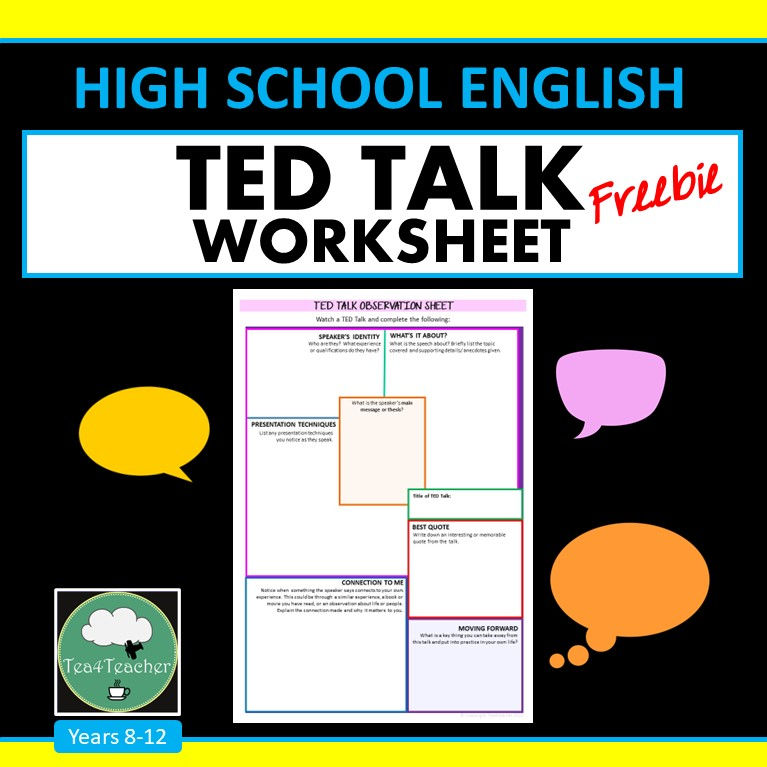
Check out this great TED Talk Viewing Worksheet FREEBIE available in the Tea4Teacher store! No matter what you do with your TED talks in class, this worksheet will help ensure that students understand the content and ideas being presented.

Comments